
EU FUNDING · FOUNDER NOTES · APRIL 2026
Above Threshold, Below the Budget Line
What the EU’s Seal of Excellence really does — and how a “rejected” Horizon Europe proposal becomes the start of something else.
The European Commission’s Seal of Excellence — a quality label for proposals that pass every threshold but run out of road on budget.
Last week, the European Innovation Council notified us that BRIDGE — our 24-month Horizon Europe proposal to bring transparency to Europe’s distressed property auction market — would not be funded. The reason wasn’t quality. It was budget.
The evaluation summary report tells the whole story. Excellence: 4.00 (threshold 4.00). Impact: 4.67 (threshold 4.00). Quality and Efficiency of Implementation: 4.67 (threshold 3.00). Total: 13.34. The proposal cleared every bar Brussels set for it. There simply wasn’t enough money in the call to fund every proposal that earned a place at the table.
A few days later, a separate note arrived from our national authority: the WIDERA Programme Committee secretariat had confirmed that the Seal of Excellence is awarded — automatically — to every Horizon Europe proposal that clears all thresholds but goes unfunded for budget reasons. BRIDGE is one of those proposals. The certificate will arrive through the Funding & Tenders Portal in the coming days.
That gap — between proposals that deserve funding and proposals that get it — is the precise reason the Seal of Excellence exists. And until you’ve been through the cycle yourself, it’s hard to appreciate how much European innovation policy quietly runs on it.
The Seal of Excellence is a quality label awarded to project proposals submitted to Horizon Europe (and previously Horizon 2020) that pass all the evaluation thresholds set out in the call but cannot be funded because the available budget is exhausted. It is not a participation trophy. It is the European Commission’s formal, digitally sealed acknowledgment that an independent panel of expert evaluators considered a proposal worthy of European public investment.
For an SME or research organisation, the Seal carries practical weight. It signals to national funding agencies, regional managing authorities, ESIF programmes, the European Investment Bank, and private investors that the project has already been vetted by one of the most demanding evaluation processes in European public finance. A growing number of member states operate dedicated funding instruments that recognise Seal holders without making them repeat the assessment from scratch.
Put another way: a Seal of Excellence converts a single rejection letter into a portfolio of new application possibilities.
Horizon Europe is, on paper, the largest publicly funded research and innovation programme in the world. In practice, it is over-subscribed in almost every call. Success rates in many topic areas sit between 5% and 15%. That means a large share of high-quality proposals — proposals that meet every published criterion — go unfunded purely because the evaluation panel had to draw a line somewhere on the ranked list.
This dynamic creates a structural problem: enormous resources are spent evaluating excellent proposals the EU cannot afford to fund, and the applicants behind those proposals lose months of work with little to show for the effort. The Seal of Excellence was introduced specifically to recover value from that process — to make the EU’s evaluation work portable, so that strong projects do not have to start from zero with the next funder.
The most useful thing about the Seal of Excellence framework is that it is not a single instrument. It is a recognition system that other funders plug into. Different member states have built different bridges across it, and the menu has expanded considerably in the last few years.
Croatia, where our company is based, runs a programme called DIGIT — financed through a World Bank loan and operated by the Ministry of Science, Education and Youth — that includes a permanent call for proposals titled Seal of Excellence under the Synergies Program. It funds projects awarded a Seal under three Horizon Europe instruments specifically: ERC Proof of Concept, MSCA Postdoctoral Fellowships, and the EIC Pre-Accelerator – Widening (BRIDGE’s track). Submission is the same proposal package, in English, through a national portal. Evaluation result inside thirty days.
The trade-off is honest and worth naming. Horizon Europe funds the EIC Pre-Accelerator at 100% of eligible costs; the Croatian Synergies call caps grant intensity at 70%, with the applicant required to secure the remaining 30% as co-financing. That isn’t equivalent funding — but it is real funding, secured against an evaluation the company has already passed, on a timeline measured in weeks rather than years. Most countries that have built post-Seal instruments make a similar trade: less per project, faster, with more applicants reached.
Beyond the national instruments, EU-level routes exist as well — the European Investment Fund’s InvestEU strands, structural fund managing authorities at regional level, and a steadily growing number of private investors who treat a recent Seal as meaningful technical due diligence.
BRIDGE was designed to take our deep-tech platform from TRL 4 to TRL 6 over 24 months — from a validated prototype to a fully integrated, multi-jurisdiction system demonstrator. The technology underneath — domain-specific NLP, knowledge graphs, predictive analytics, an explainable AI risk-assessment engine — does not depend on which agency writes the cheque. We will continue to build it.
What changes is the path. With a positive evaluation in hand and a Seal of Excellence on the way, the next steps become much clearer: pursue the Synergies call and any other Seal-aligned instruments we qualify for, sharpen the few areas the evaluators flagged (notably team scale and AI/ML engineering depth), and return to the next Horizon Europe round with a stronger proposal. Read in the right spirit, the ESR is genuinely useful — it is the kind of detailed external review a startup would normally pay a consultancy to produce.
If you are reading this in the days after your own “despite its merits” email, the temptation is to treat “above threshold but unfunded” as a polite euphemism. It isn’t. It is a real, transferable signal — and one that European innovation policy is actively trying to make more useful every year.
Three concrete things worth doing in the first two weeks. Read the Evaluation Summary Report carefully — twice; the second pass is always more useful than the first. Talk to your National Contact Point and ask specifically what Seal-aligned instruments your country runs for the call you applied to. And map the regional ESIF programmes and any private investors in your sector who treat the Seal as a quality signal. The infrastructure to catch good projects that fall just below the budget line exists because Europe knows the projects themselves are worth catching.
We’ll keep building BRIDGE. The grant call was one path. It was never going to be the only one.
Ivan Livić
Founder & CEO, VendueTech (Bidsale.ai) · Zagreb, Croatia
Europe’s judicial property auction market is often misunderstood.
It is tempting to describe it as a continent-wide stream of distressed bargains. That makes for a good headline, but it misses the reality. In 2026, Europe’s auction market is not being driven by a broad housing collapse. It is being shaped by something more complex: high property values, localized distress, uneven liquidity, fragmented public data, and legal processes that vary sharply from one country to the next.
That complexity is precisely what makes the market interesting.
For real estate investors, banks, servicers, and asset managers, judicial auctions remain one of the few parts of the European property market where information asymmetry still matters. The opportunity is not simply that assets may trade below market value. It is that the process itself is difficult to interpret, compare, and monitor at scale.
At the macro level, Europe’s housing market has proven far more resilient than many expected.
Between 2010 and 2024, house prices across the EU rose by 53%, while rents increased by 25%. In Q3 2025, EU house prices were still growing year on year. That is not the backdrop of a market in free fall. It is the backdrop of a market where housing remains structurally expensive, affordability is under pressure, and collateral values have held up better than feared.
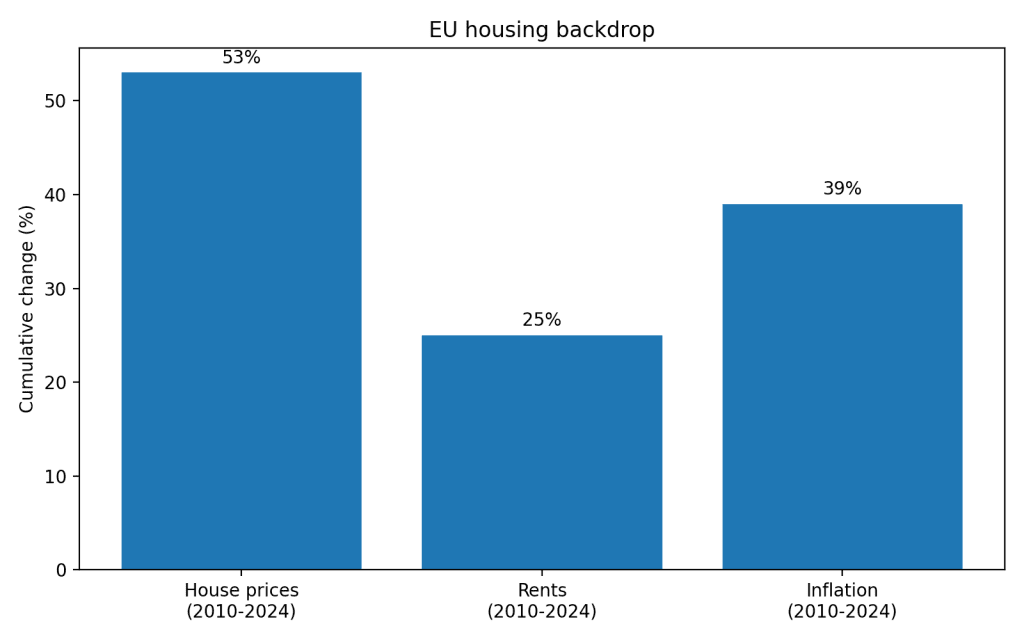
This matters because judicial auctions do not exist in isolation. They sit downstream from affordability pressure, refinancing conditions, borrower distress, and national enforcement systems. When those forces move in different directions, the result is not one European auction market, but many local ones.
The banking picture tells a similar story.
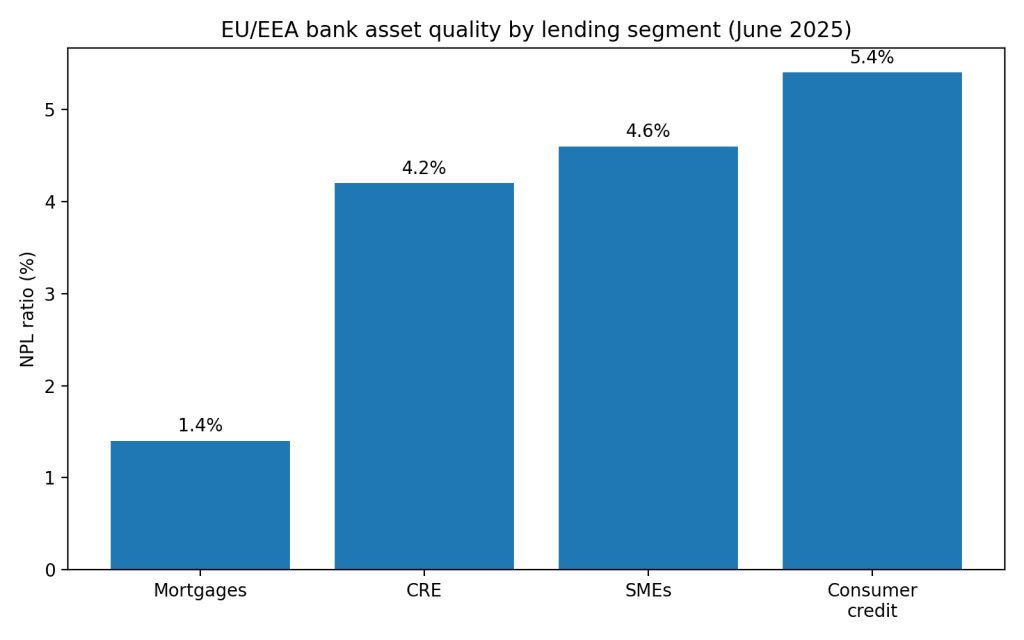
Across the EU and EEA, mortgage books remain relatively healthy. Non-performing loan ratios for residential mortgages are low by historical standards, while higher stress is more visible in areas such as commercial real estate, SMEs, and consumer lending.
That suggests a crucial distinction: Europe is not currently in a generalized mortgage-distress cycle. Instead, auction activity is being supported by more concentrated pockets of pressure — individual borrower distress, refinancing issues, legacy enforcement cases, local legal bottlenecks, and asset-specific complexity.
For investors, that changes the thesis completely.
Judicial auctions in 2026 are less a “distress flood” market and more a special situations market.
A common misconception is that judicial auctions are attractive simply because they are cheaper.
Price matters, of course. But in practice, the bigger edge often comes from process asymmetry.
Europe’s auction systems differ by country in ways that directly affect pricing:
That means there is no single “auction discount” across Europe.
In some markets, the opening bid starts at or near market value. In others, the legal framework allows progressively lower thresholds in later rounds. In still others, the pricing floor can be far below appraised value.
So when people speak casually about “buying 40% below market,” they are usually oversimplifying. Judicial-auction discounts are not universal. They are procedural, country-specific, and highly dependent on competition, round structure, and asset quality.
One of the clearest examples of this fragmentation is reserve-price logic.
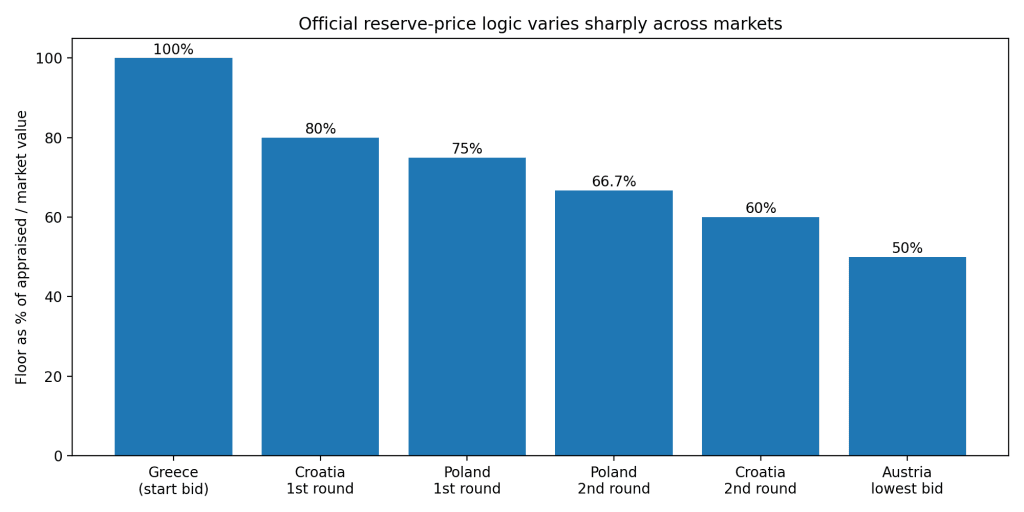
In Greece, the starting bid for immovable property is tied to market value. In Croatia, the first online auction cannot sell below 80% of appraised value, while the second round can go down to 60%. In Poland, first-round pricing is typically 75% of appraised value and around two-thirds in the second round. Austria’s framework allows a much lower floor in some cases.
These rules do not determine the final transaction price by themselves, but they do define the boundaries within which price discovery happens.
For investors, this creates an important analytical distinction:
Another area where the market is often misunderstood is speed.
At first glance, judicial auctions can look efficient. Some bidding windows are short, digital, and transparent. But the real timeline is much longer than the live auction itself.
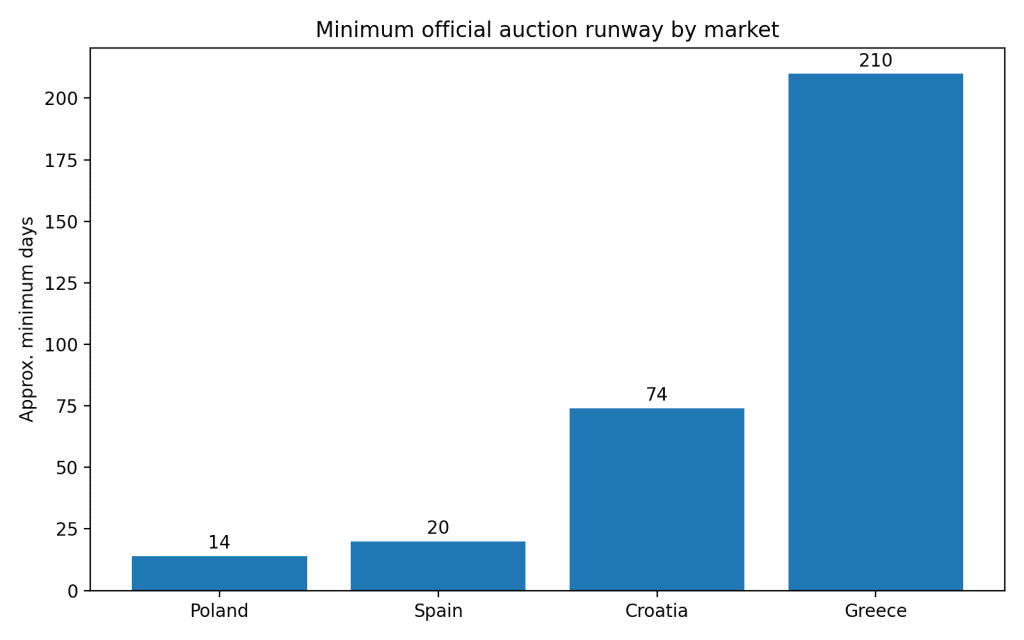
Spain’s judicial e-auctions typically run for 20 calendar days. Poland requires notice publication at least two weeks before the auction. Croatia requires at least 60 days between publication and the start of bidding, with bids then collected over 10 working days. Greece is slower still, with auction dates tied to a much longer procedural schedule following seizure.
That means “time to sell” in auctions is not the same as “days on market” in conventional brokerage.
A better way to think about it is procedural runway:
In judicial auctions, time is part of the return profile.
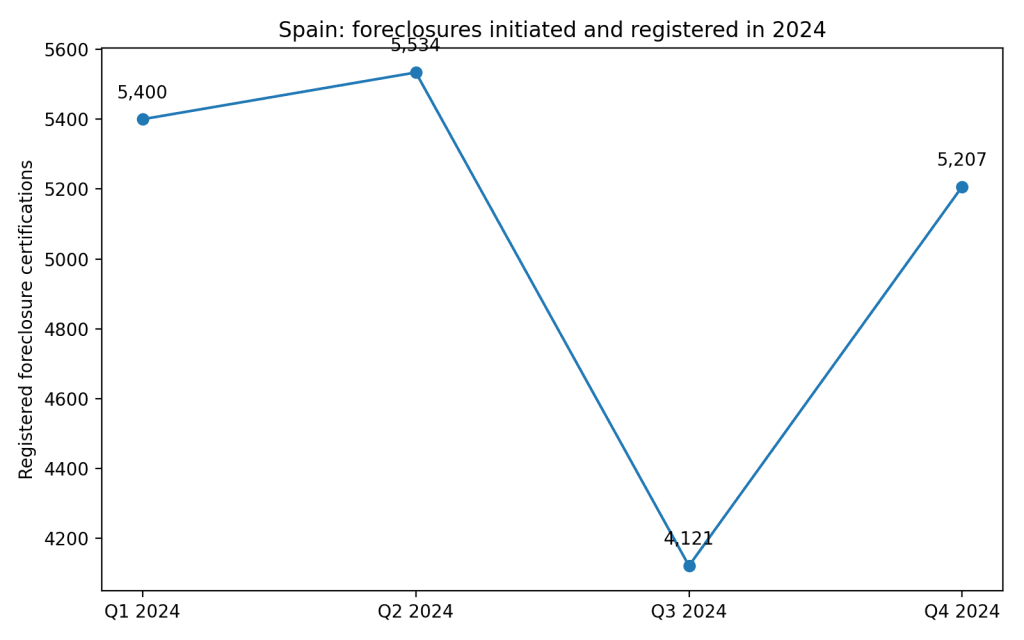
Spain remains one of the most transparent large European markets for public-auction monitoring, thanks to its official digital infrastructure and national statistics.
The market shows active foreclosure flow, but not disorder. Foreclosure activity remains present, yet the data does not point to a market spiraling into systemic distress. Instead, it reflects a functioning enforcement ecosystem in a market where digitization has improved visibility without removing complexity.
That makes Spain a useful benchmark. It shows what happens when auction infrastructure becomes more transparent: buyers gain better visibility into volume and process, but the work of interpretation does not disappear.
PwC and McKinsey both point to a European property market that is stabilizing and becoming more selective, not one that is experiencing a broad-based rebound across all segments.
That is exactly where auctions remain relevant.
They matter when:
In other words, auctions are still important not because the whole market is broken, but because parts of it remain inefficient.
And inefficiency is where specialist buyers still earn their edge.
In 2026, Europe’s judicial property auction market is best understood as an inefficiency market.
The inefficiency is legal.
The inefficiency is operational.
The inefficiency is informational.
Only sometimes is it purely about price.
That means serious investors should not focus only on the lowest possible bid. They should focus on:
The strongest buyers in this market are rarely the most aggressive.
They are usually the least confused.
Europe’s judicial auctions are not disappearing. Nor are they turning into a uniform, continent-wide bargain channel.
They are becoming more digital, but they remain fragmented. They are shaped by resilient property values, relatively contained mortgage distress, country-specific enforcement systems, and a level of procedural complexity that still keeps many buyers at a distance.
That is why this market continues to matter.
Not because it is easy.
Because it is still inefficient.
And in real estate, inefficiency is often where the most interesting opportunities begin.
Looking to track judicial property auctions across fragmented European markets more efficiently?
Book a demo of Bidsale® and see how VendueTech turns scattered public-auction data into structured real-estate intelligence for investors, banks, and asset managers.
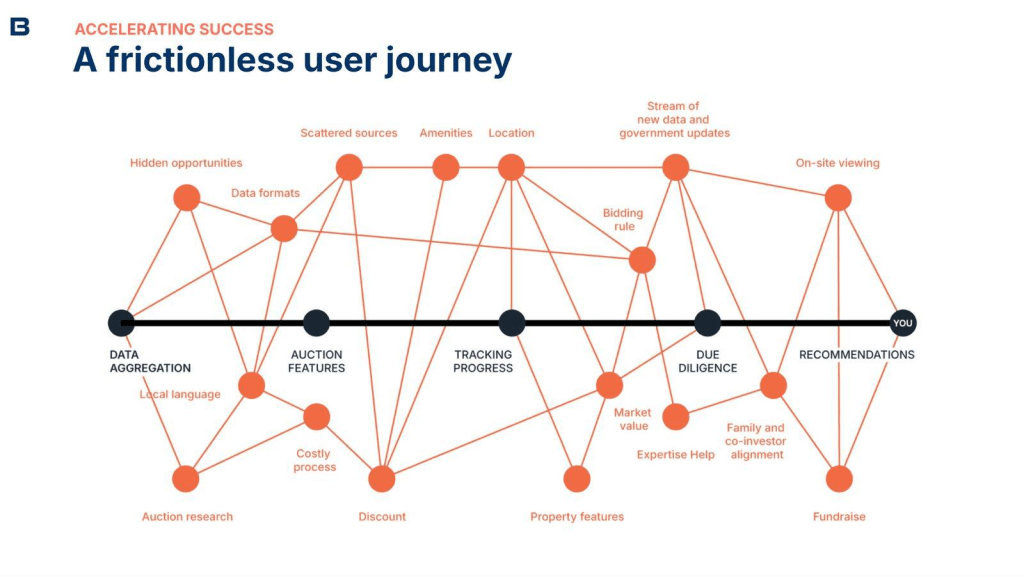
Public real estate auctions across Europe generate hundreds of thousands of opportunities every year. Yet for many professional investors, accessing this market remains inefficient.
Auction data is fragmented across government portals, court registries, and legal databases. Critical information is often incomplete, requiring hours of manual research to identify viable opportunities.
At VendueTech, we are building Bidsale® to solve this problem.
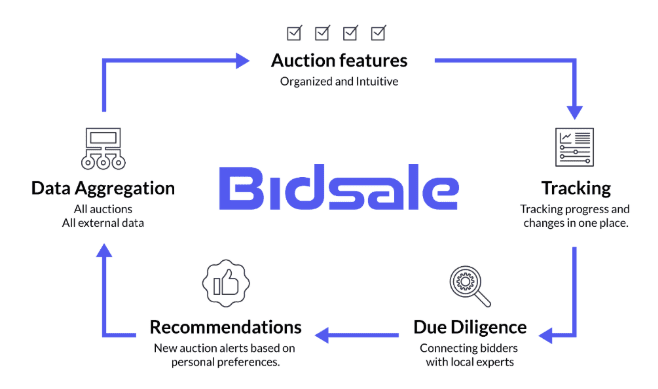
Bidsale® transforms fragmented public auction data into structured, searchable intelligence designed for professional investors, asset managers, and real estate teams.
In the short demo below, you can see an early preview of the platform.
With Bidsale®, investors can:
For institutional investors, funds, servicers, and asset managers, Bidsale® can also provide custom datasets of public real estate auctions tailored to your investment strategy, geographic focus, or portfolio criteria.
Instead of spending weeks collecting and structuring data manually, your team can start with ready-to-use intelligence designed for real estate decision-making.
Watch the 1-minute demo above to see an early preview of Bidsale®.
If your team works with auction properties or distressed real estate opportunities, we would be happy to show you more.
👉 Book a demo:
https://bidsale.ai
At VendueTech, our mission is to turn complex, fragmented public auction information into reliable, machine-readable intelligence that can be used safely, consistently, and at scale across Europe.
Public auction datasets are inherently challenging:
they are heterogeneous, multilingual, structurally inconsistent, and evolve continuously over time. Making this data usable for analytics, decision-making, and downstream AI systems requires more than off-the-shelf tooling—it requires deep technical R&D, careful validation, and production-grade engineering.
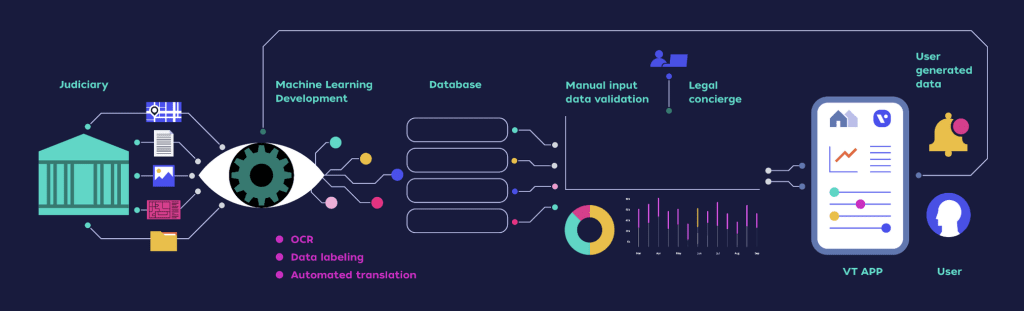
To tackle this problem systematically, VendueTech partnered with EDIH CROBOHUB++ and the FER TakeLab at the FER, using the Test-Before-Invest (TBI) framework.
This collaboration allowed us to move from research hypotheses to deployed, production-ready AI infrastructure—without premature scaling risk.
The Test-Before-Invest model enables technology companies to:
For VendueTech, TBI provided the structure needed to validate one of the hardest problems in applied AI today:
Consistent, schema-faithful extraction of structured information from complex, semi-structured public data—across jurisdictions, languages, and formats.
The first phase focused on data characteristics and constraints rather than tooling.
Together with FER researchers, we analyzed:
Key insight
Any solution had to preserve semantic structure (key–value relationships, nested attributes, temporal fields) exactly as presented, without heuristic loss or uncontrolled normalization.
This immediately ruled out generic text-conversion pipelines.
Venduetech - TBI report - TBI1 …
The second phase evaluated whether modern AI models could reliably transform complex inputs into strictly structured outputs suitable for automated processing.
We tested multiple approaches to structured extraction and found consistent limitations:
Example input (just the beginning of the document):
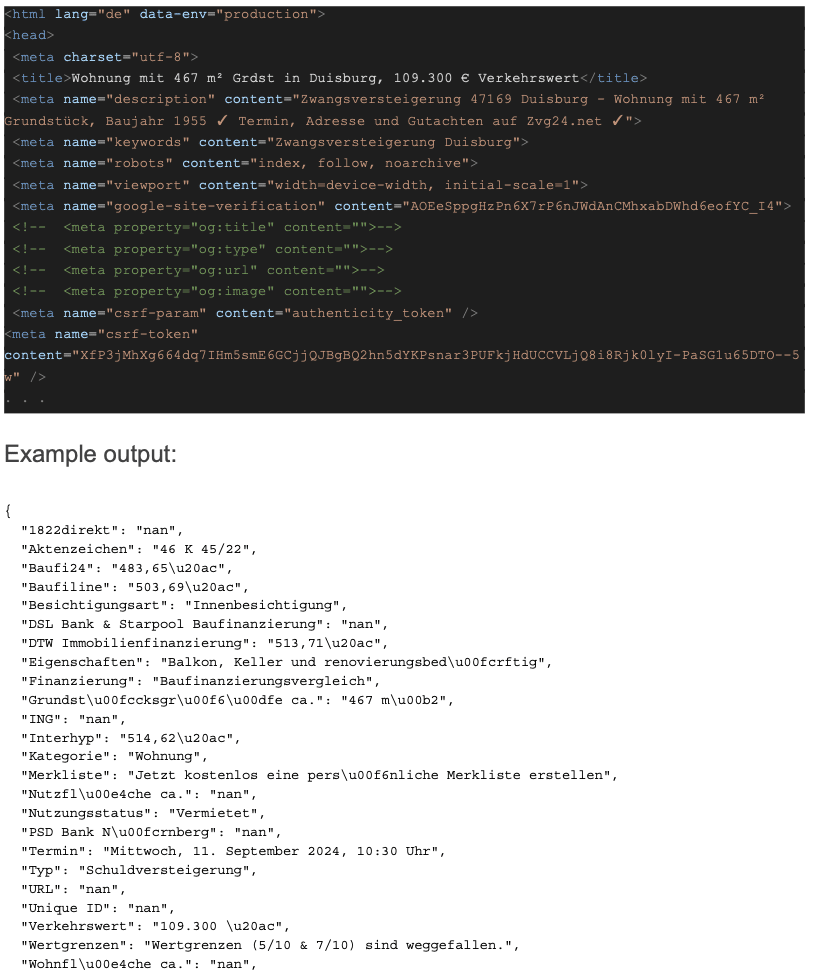
In collaboration with TakeLab, we designed and evaluated instruction-tuned large language models trained specifically to map domain-specific inputs into deterministic, key-value outputs.
Two strategies were compared:
Outcome
Instruction-tuned models significantly outperformed prompt-only approaches, achieving near-deterministic output fidelity under exact-match evaluation—an essential property for production systems.
This phase validated a core architectural principle of VendueTech:
If output consistency matters, domain-specific fine-tuning beats generic prompting—every time.
Venduetech - TBI report - TBI2 …
High extraction accuracy alone is insufficient without operational robustness.
The final TBI phase focused on deploying the solution in realistic conditions, emphasizing:
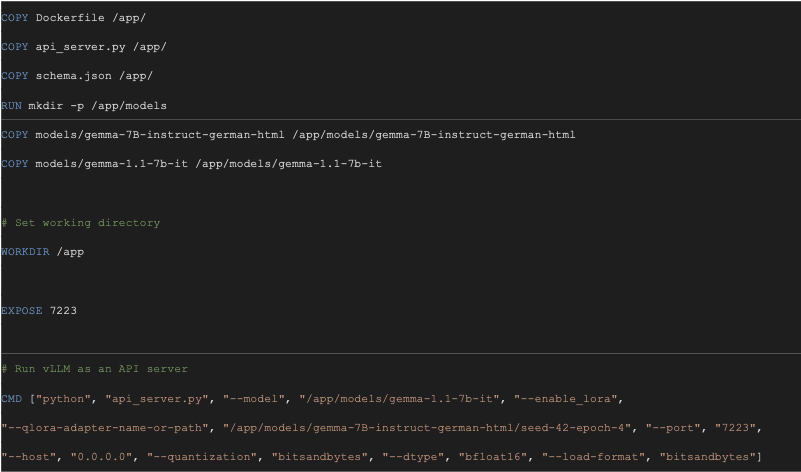
Working closely with TakeLab, we delivered a fully containerized AI service with:
All components are encapsulated in Docker, enabling:
The result is a system where complex public data can be transformed into production-ready, schema-valid JSON via a simple API, without sacrificing precision, control, or auditability.
The work delivered through the TBI collaboration forms the backbone of VendueTech’s broader AI roadmap.
Future directions include:
This is how Bidsale®, VendueTech’s auction intelligence platform, is being built:
quietly, rigorously, and with infrastructure-level ambition.
The EIC Accelerator is one of the most selective and demanding public funding programmes in Europe. Run by the European Innovation Council, it is designed for deep-tech startups and scaleups developing breakthrough technologies with the potential to create new markets or fundamentally transform existing ones.
Unlike many innovation grants, the EIC Accelerator is not designed for incremental improvement or early experimentation. It targets companies that:
The programme offers grant funding, equity investment, or blended finance, but funding is only one part of the story. What truly defines the EIC Accelerator is the evaluation process itself: a multi-stage examination of technology excellence, market impact, execution realism, risk awareness, and organisational maturity — all assessed at a European level.
This is the context in which we applied.
VendueTech is building Bidsale, an AI-driven platform that transforms fragmented public judicial and government auction data into actionable insights for professionals working with distressed real estate. The problem we are addressing sits at the intersection of deep technology, law, public data, and cross-border regulation — a space where innovation is urgently needed, but inherently difficult.
The EIC Accelerator felt like a natural fit, not just because of the funding instruments it offers, but because of the level of scrutiny it applies. We wanted to test whether our technology, market assumptions, and execution narrative could withstand that level of evaluation.
At VendueTech, we successfully passed the EIC Accelerator Short Proposal on our first attempt and advanced to the second stage of the evaluation (the full proposal), where we received a score of 6 out of 9. A score of 9 out of 9 is required to progress to the third and final stage — the interview with the EIC jury in Brussels EIC Accelerator - Long proposal….
What is important to understand — and often overlooked — is that companies have up to three attempts to submit the full (Long) Proposal. The EIC Accelerator is explicitly designed as an iterative process for companies working on genuinely hard problems.
We intend to use our next attempt in May or September, applying what we have learned from this evaluation.
This post is a transparent account of what that first full-proposal attempt taught us.
The Short Proposal stage enforces one core discipline: clarity.
You must explain a complex problem, a non-obvious solution, and a credible technological leap — without operational detail, without hedging, and without hiding behind buzzwords.
Passing this stage on the first attempt confirmed that:
What it did not mean was that the hardest part was behind us.
The Long Proposal is not an expanded version of the Short Proposal.
It is a fundamentally different exercise.
At this stage, evaluators assess the company across three criteria:
Our score of 6/9 reflected solid strengths, but insufficient confidence across all three criteria to justify progression to the final interview stage.
One of the most underestimated aspects of the EIC Accelerator is the scale of work required.
This was not a founder-only exercise. Over several months, more than 30 people contributed to the application.
This included:
This coordination took months, not weeks.
The EIC Accelerator is not just an application.
It is an organisational stress test.
Evaluator feedback consistently acknowledged that:
In short: the technology vision itself was not the issue.
The most important gaps were not about ambition, but about proof.
One key lesson stood out:
In the EIC Accelerator, inconsistency across criteria stops progress, even when strengths are evident.
We are actively preparing the next iteration of our Long Proposal, with a clear focus on addressing the feedback.
Specifically, we are:
This work is already underway.
The EIC Accelerator is not designed for one-off attempts. It is designed for companies building genuinely difficult technology in difficult markets — and for those willing to improve under scrutiny.
Our first Long Proposal submission gave us clarity, not closure.
We are using that clarity to come back stronger.
If you are considering the EIC Accelerator, go in with:
It is a full examination of your company — and, if approached seriously, a valuable one.
Buying property at auction in Italy can be thrilling, confusing, and incredibly rewarding. But for most foreign investors, it’s a maze of bureaucracy, legal nuance, and cultural specificities. We sat down with a recent Italian auction buyer to walk through every step, from finding the listing to winning the bid, and finally getting the keys. Here’s what we learned.
It all started with proximity. Our interviewee noticed the house next door had been sitting empty for years, part of a newer development that had fallen into distress. In Italy, it's not uncommon for developers to place projects in special purpose vehicles (SPVs). If the company defaults, the unsold units become assets in judicial liquidation, often ending up at auction.
But how do you know a property is even available?
The first place to look is the official portal run by the Ministry of Justice: pvp.giustizia.it, a centralized site that lists auction assets across the country, including real estate, vehicles, and other goods.
This government portal gives full documentation on each lot: its valuation, location, legal status, photos, and upcoming auction details. While other aggregators exist, the government site remains the most complete and authoritative source.
🔗 Reference: Italian Ministry of Justice Property Auction Portal
Once the property was spotted, the race to prepare began. In Italy, participating in an auction requires a verified digital identity, a certified email (PEC), and digital signature software, all part of the country’s secure digital infrastructure.
Buyers must complete a government-issued online form and upload multiple documents:
All documents must be submitted via PEC to the court and the auction's managing entity. There’s zero tolerance for error, missing a single detail means you're excluded from the auction. And you won't be notified in advance, confirmation of eligibility only comes once the auction opens.
🔗 Reference: Agenzia per l’Italia Digitale – Guide to Digital Signature and PEC
The auction itself lasted 24 hours. Bidders had already submitted their initial offers, but once the platform went live, they could place higher bids in real-time, each one needing to exceed the previous by a minimum of €10,000.
Our buyer described the day as "stressful." With six participants in the race, offers came in through the night. His strategy? Submit a strong second bid before bed to signal commitment and deter competitors.
The platform auto-extends the deadline by 10 minutes if a bid is placed in the final stretch, a mechanism that mimics a live auctioneer's final calls.
While some auctions in Italy are silent (the highest initial bidder wins), this one was asynchronous bidding, standard for many court-run property sales.
If you win, the clock starts ticking. You have a legally defined window to pay the remaining balance (in this case, up to 120 days), after which the court enacts an atto di trasferimento, a unilateral transfer of ownership authorized by a judge, not a notary.
The notary still plays a role. They prepare the official documents, confirm the mortgage clearance, and ensure legal handover. Only once the property is mortgage-free and all court protocols are completed will you receive the keys.
But if you don’t win? You get your deposit back in full. There are no penalties or hidden fees unless the platform specifies otherwise. And for the winner, an additional service fee (1–3% of the property value) may apply, depending on the provider.
🔗 Reference: Notariato.it – Guide to Judicial Transfers and Real Estate Law
The price tag might look like a steal, often 25–30% below market value, but auctioned properties come with caveats. For example, our buyer discovered the home had no interior doors.
Buyers must often budget for:
Unlike private market purchases, auction sales offer no guarantees. You're buying as-is, which makes property visits essential. These can be booked through the auction platform prior to bidding, usually managed by third-party custodians.
🔗 Reference: Idealista: Pros and Cons of Buying Property at Auction in Italy
While not the case in our interview, one major risk looms over Italian property auctions: occupancy. If a property is still inhabited, the legal and social complexity increases dramatically.
In Italy, evictions must go through formal procedures involving the police and, often, social services, especially if children or vulnerable individuals are involved. This can delay possession by months or even years.
This is why transparency about occupancy status, found in the court documentation, is crucial.
🔗 Reference: Gazzetta Ufficiale – Legal Procedures for Eviction in Judicial Sales
From foreign investors to locals navigating Italy’s legal maze, one thing is clear: the process is not simple.
That’s where platforms like Bidsale come in.
By aggregating judicial auction data across the country and translating complex legal and procedural steps into actionable insight, Bidsale, VendueTech’s AI-powered tool, lowers the barrier to entry.
Key opportunities for innovation include:
For cross-border investors, even something as basic as understanding the digital identity system (not standard across Europe) is a challenge. A platform that bridges these systemic gaps could unlock significant potential in Italy’s distressed real estate sector.
🔗 Reference: European e-Justice Portal – Cross-Border Access to Judicial Auctions
From the first listing to receiving the keys, the entire process takes an average of 6–9 months. It’s a unique hybrid of civil procedure and digital reform , combining old-world legal traditions with new-world platforms.
But for those who navigate the process well, it can offer:
At VendueTech, we believe that by combining legal intelligence, user-first design, and trustworthy automation, distressed property markets like Italy's can become not only more accessible, but more equitable.
Whether you're an individual buyer, a fund manager, or a legal firm advising international clients, understanding these nuances is essential. We’re here to bring structure to the chaos, one insight, one auction, and one market at a time.
At VendueTech, we’ve made tremendous progress through strategic initiatives, research and development, and international expansion. Below is an updated timeline highlighting key milestones and achievements.
VendueTech has made good strides since its inception, advancing through key research and development programs, receiving significant funding from prestigious grants, gaining recognition across multiple media platforms, and securing essential intellectual property protection. As we continue to build on these achievements, we are excited for what the future holds — a future filled with innovation, growth, and success in the real estate auction industry.
Stay tuned for more updates as we continue to push boundaries, collaborate with industry leaders, and bring our vision to life!
We’re proud to announce that VendueTech has become the first Croatian company to apply for EuroHPC AI resources — with the support of SRCE (University of Zagreb Computing Centre) through the EDIH CROBOHUB++ programme.
This milestone highlights Croatia’s entry into the world of European high-performance computing (HPC) for startups — and underscores our mission to transform how real estate auctions are accessed and understood across the EU.
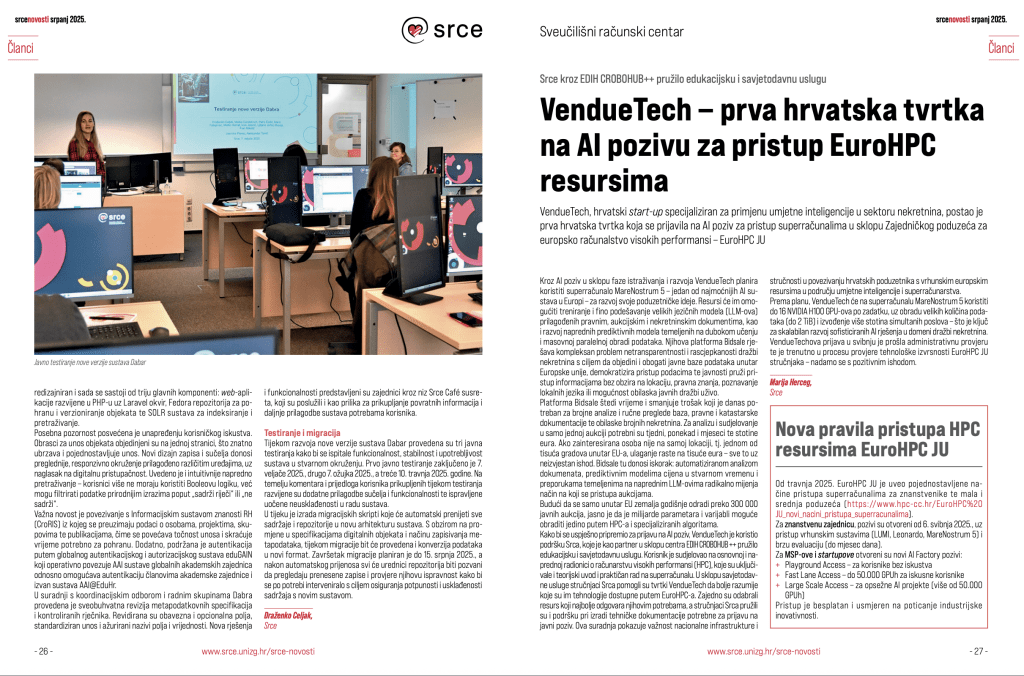
Through the EuroHPC AI call, VendueTech plans to use MareNostrum 5 — one of Europe’s most powerful AI supercomputers — to advance research and development of our Bidsale® platform.
With this access, we will:
Bidsale® addresses the fragmented and non-transparent real estate auction market by unifying and enriching public databases. Our platform democratizes access, giving anyone — regardless of location, legal knowledge, or language — a fair opportunity to participate in property auctions.
Today, analyzing just one property auction can take weeks or even months, cost hundreds or thousands of euros, and still deliver uncertain results.
With HPC and AI:
Considering that over 300,000 property auctions take place annually across the EU, only HPC and specialized algorithms can process the billions of variables and parameters required for truly scalable innovation.
This achievement would not have been possible without SRCE, Croatia’s University Computing Centre.
Through workshops and advisory services, SRCE guided us in:
This collaboration shows the importance of national expertise in connecting Croatian entrepreneurs with world-class European resources in AI and supercomputing.
VendueTech’s application has successfully passed the administrative review and is now under EuroHPC JU technical excellence evaluation.
If approved, we will run workloads on MareNostrum 5 with up to:
We look forward to a positive outcome and to pushing the boundaries of AI innovation for real estate markets across Europe.
We wish to share our deep gratitude to the Faculty of Electrical Engineering and Computing (FER), University of Zagreb, and to the professionals and experts from SRCE for their guidance, support, and knowledge throughout this process.
Their help was instrumental in making VendueTech the first Croatian company to apply for EuroHPC AI resources.
📖 You can read the full article in Srce Novosti, July 2025 (Issue 102) here:
👉 Download PDF
✨ With FER’s academic excellence, SRCE’s national expertise, and EuroHPC’s infrastructure, VendueTech is charting a new course — bringing AI + HPC innovation into Europe’s real estate sector and setting a precedent for Croatian startups on the global stage.
On August 26, 2025, VendueTech reached a major milestone: Bidsale® is now a registered EU trademark (EUIPO No. 019184618).
This grants us exclusive protection across all 27 EU member states, securing our brand identity as we scale across Europe. Even more exciting, the entire process took just 4½ months, completed with zero oppositions — thanks to smart planning, EUIPO’s Fast Track procedure, and cost-saving incentives through the EU SME Fund.
Trademark protection isn’t just a legal checkbox. For us, it’s a strategic growth lever that supports VendueTech’s mission to democratize real estate auctions.
Here’s what it means:
You can verify the registration and see full details on TMview, the European intellectual property database:
View Bidsale® Trademark in TMview
Securing the Bidsale® wordmark is a key step in building trust and visibility across the European market. As we expand operations and partnerships, this trademark ensures that our brand is protected, recognizable, and ready for new collaborations — from licensing agreements to co-branded ventures.
💡 For VendueTech, IP protection is not just defensive — it’s opportunity-driven.
We’re proud of how our team executed this process with precision — leveraging EUIPO’s digital-first processes, the Fast Track option, and available incentives to complete it efficiently and cost-effectively.
Bidsale® is now officially ours across Europe — and this is only the beginning of our brand’s journey.
✨ With Bidsale® protected at the EU level, we’re moving forward with even greater confidence as we scale across Europe and beyond.
We are thrilled to share some incredible news: VendueTech has been accepted into the Eurostars funding programme! 🎉
This isn’t just another milestone — it’s a transformative step forward. The Eurostars programme is Europe’s flagship initiative supporting innovative SMEs that push boundaries. Co-funded by the European Union through Horizon Europe, along with national and bilateral partners, it empowers startups like ours to bring bold ideas to life on a global stage.
Our approved project — “Bidsale: A Next-Generation AI-Powered SaaS Platform for Distressed Property Auctions” (E! 8363) — will fundamentally reshape how real estate auctions are conducted. Our vision is clear: create a platform where artificial intelligence, transparency, and trust drive the auction process, making real estate investment more democratic, accessible, and efficient than ever before.
Being Eurostars-labeled is far more than just funding. It represents:
Through Eurostars, VendueTech will be able to:
Our Eurostars project is not just about vision — it’s backed by solid financial planning and co-funding support:
This balanced model ensures both public support and private commitment, showing that we are fully invested in delivering real impact.
International collaboration is at the heart of Eurostars, and we’re proud to have two outstanding partners from Slovenia joining us on this journey:
Together, these collaborations strengthen our project with technical depth and cross-border innovation power.
Behind this success is our incredible team and the partners who share our belief that real estate auctions don’t have to be complex, opaque, or exclusive.
Starting September 2025, our 24-month project officially begins. We’ll work toward clear milestones, deliverables, and market impact goals — all under the watchful eye of Eurostars evaluators and HAMAG-BICRO.
This isn’t just about building software. It’s about reshaping an industry.
We’re building more than a platform — we’re building a movement. And we’re opening our doors to new collaborators worldwide.
If you’re passionate about AI, real estate, product design, or building disruptive technology, this is your chance to make a real impact.
We offer a 100% equity-based compensation model, aligning your success directly with ours. Together, we can shape the future of real estate auctions.
👉 See current opportunities: venduetech.com/careers
This milestone would not have been possible without the support of our partners and the institutions backing the Eurostars programme.

We wish to thank:
Their trust and support enable us to turn vision into reality and deliver innovation with impact.
This project has received funding from the Eurostars-3 Joint Programme with co-funding from the European Union’s Horizon Europe Research and Innovation Programme, HAMAG-BICRO, and the Swiss–Croatian Cooperation Programme.
From billions of parameters to millions of documents, here’s how we’re building the future of property auction analytics—powered by HPC, LLMs, and predictive modeling.
Published on: April 24, 2025
Author: Renato Mutavdzic, Jr. AI Engineer
Context: The Real Estate Auction Problem
Real estate auctions are an opaque and fragmented landscape. Legal documents are dense, auction listings vary wildly in format, and market predictions are speculative at best. Investors and institutions often navigate this chaos manually.
BidSale, our AI-native platform at VendueTech, aims to solve this through automated document analysis, real-time price forecasting, and retrieval-augmented recommendation systems—powered by LLMs, deep learning, and massively parallel computing.
HPC: Not Just Nice-to-Have, But Mission-Critical
Training models like LLaMA 2, Falcon, and even domain-specific LLMs for legal/real estate use requires an environment beyond cloud or local resources.
Enter EuroHPC’s MareNostrum AI Cluster, where we will run:
Monthly usage: approximately 2500 node hours
Total dataset for training: approximately 2 TiB
We’ll leverage this to:
The AI Stack: Modular, Multi-Modal, Multilingual
Natural Language Processing (25%)
Predictive Analytics (20%)
Machine Learning (20%)
Computer Vision (25%)
Data Mining & Pattern Recognition (10%)
What Makes BidSale Unique
FER TakeLab: Academic Precision at Production Scale
We’re not alone in this journey. Our academic partner TakeLab at the University of Zagreb’s Faculty of Electrical Engineering and Computing (FER) brings decades of research excellence in NLP, knowledge grounding, and language modeling.
Their role:
This industry–academia synergy helps us scale fast without sacrificing rigor.
SRCE and the Role of National Infrastructure
In addition to EuroHPC, BidSale is supported by SRCE (University of Zagreb University Computing Centre), Croatia’s leading institution for national academic HPC infrastructure. SRCE is providing foundational support in terms of environment setup, containerized deployment compatibility, and compliance with national infrastructure requirements.
Moreover, we’ve applied for a CROBOHUB++ Innovation Voucher to further accelerate our work. This co-financing mechanism is intended to support high-potential AI innovations in Croatia and the EU, and we’re currently awaiting final determination.
This effort is also a precursor to our broader vision: joining an EU's AI Factory, a federated, production-grade, domain-specific platform for applied AI solutions in proptech, legal tech, and financial analytics. BidSale is only the beginning.
Performance Engineering & I/O Strategy
To mitigate common AI bottlenecks:
The I/O architecture allows data-hungry training loops to fully utilize compute without latency gaps.
Ethical AI: Fair, Transparent, Sustainable
Our Hypotheses (and Why They Matter)
We believe:
If confirmed, this transforms real estate—from bureaucratic chaos to real-time, data-driven decision making.
What’s Next
We’re not just building a product. We’re building the infrastructure for the next decade of real estate.
Read more at https://rnca.fccn.pt/en/marenostrum-5/
If you are an AI Engineer, PhD researcher, Algorithm developer, Quant, Back-end, Front-end engineer, or another field, check out our open positions and apply here.
We’re proud to share that on February 2, 2025, VendueTech officially received Community Design protection from the European Union Intellectual Property Office (EUIPO).
Our design, registered under EUIPO No. 015091852-0001, covers graphical user interfaces (GUIs) — ensuring that the unique look and feel of our platform’s visual design is now legally protected across all 27 EU member statesEUIPO - VendueTech certificate.

For a technology company like VendueTech, innovation doesn’t stop at algorithms and infrastructure. The user experience and design of our platform are equally critical to how we deliver value.
With EUIPO Community Design protection, we:
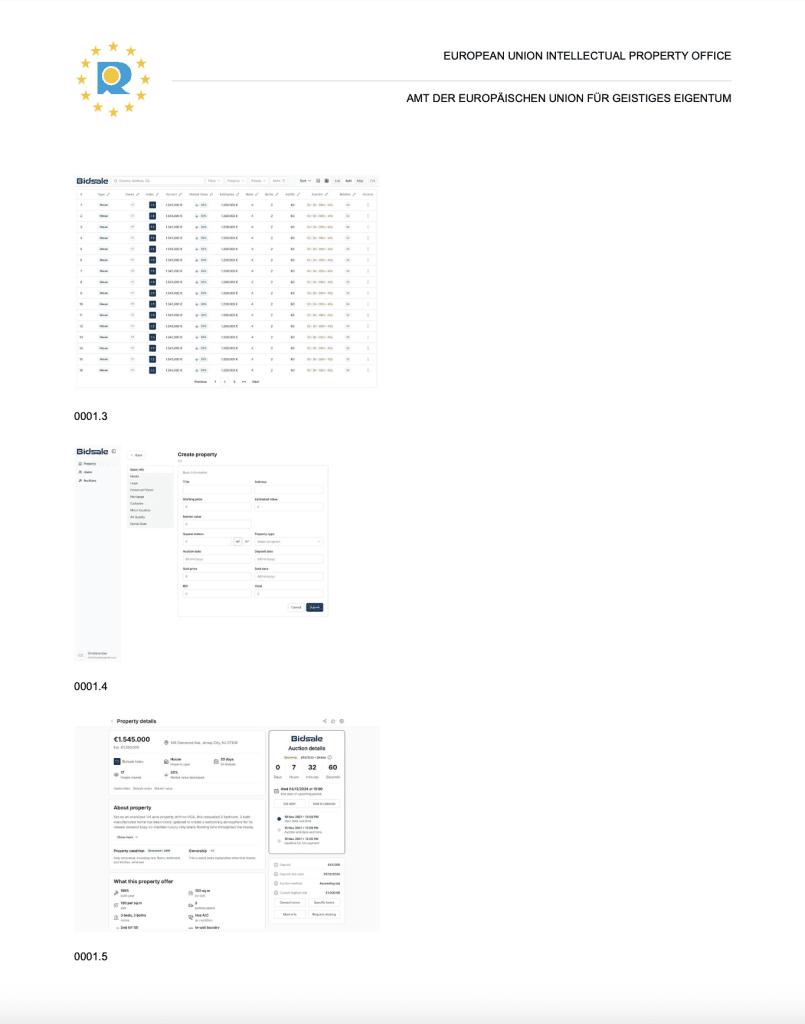
This milestone adds another layer to VendueTech’s intellectual property protection strategy. Alongside our EU trademark registration, this Community Design certificate ensures that both our brand identity and user experience are defended at the European level.
It also reinforces our ability to expand Bidsale confidently across markets — knowing that our designs and innovations are recognized and secured by EU law.

Protecting our intellectual property isn’t just about defense — it’s about creating room to grow. With EUIPO Community Design protection now in place, we are even better positioned to scale Bidsale across Europe while ensuring that our unique innovations remain ours.
✨ Another step forward in building the future of real estate auctions — secure, transparent, and user-friendly.
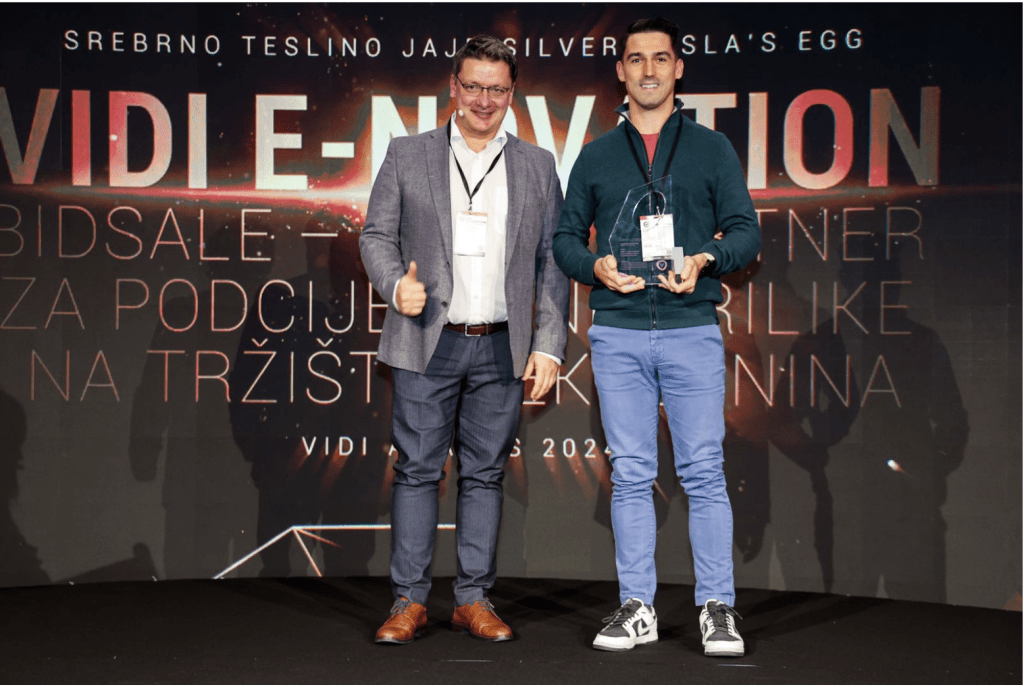
We are thrilled to announce that VendueTech has been awarded the Silver Teslino Jaje at the VIDI E-novation Awards 2024 for our innovation Bidsale — a platform leveraging advanced tech to revolutionize how property data, auctions, and real estate information are accessed and analyzed. vidilab.vidi.hr
This recognition reaffirms our commitment to pushing the boundaries of real estate tech and delivering value through automation, transparency, and accessibility.
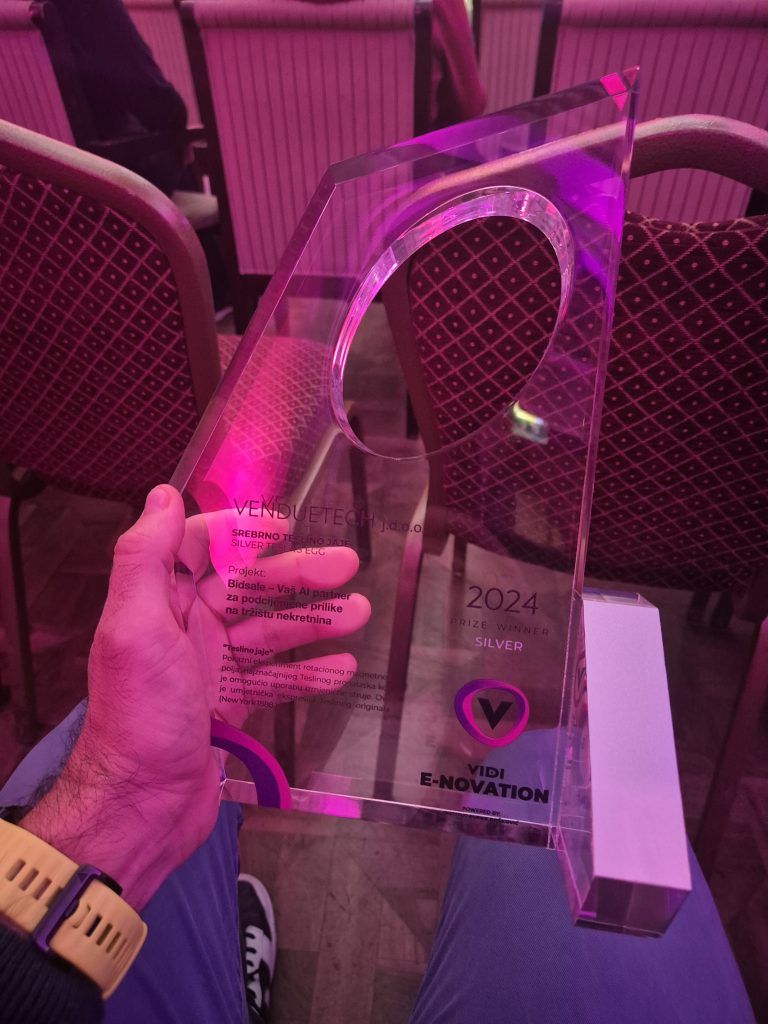
Receiving the Silver “Teslino Jaje” is not just an accolade; it’s a milestone.
Here’s what it means for us:
According to the award jury and media coverage:
We couldn’t have achieved this without the support of many people and institutions.
Special thanks to:
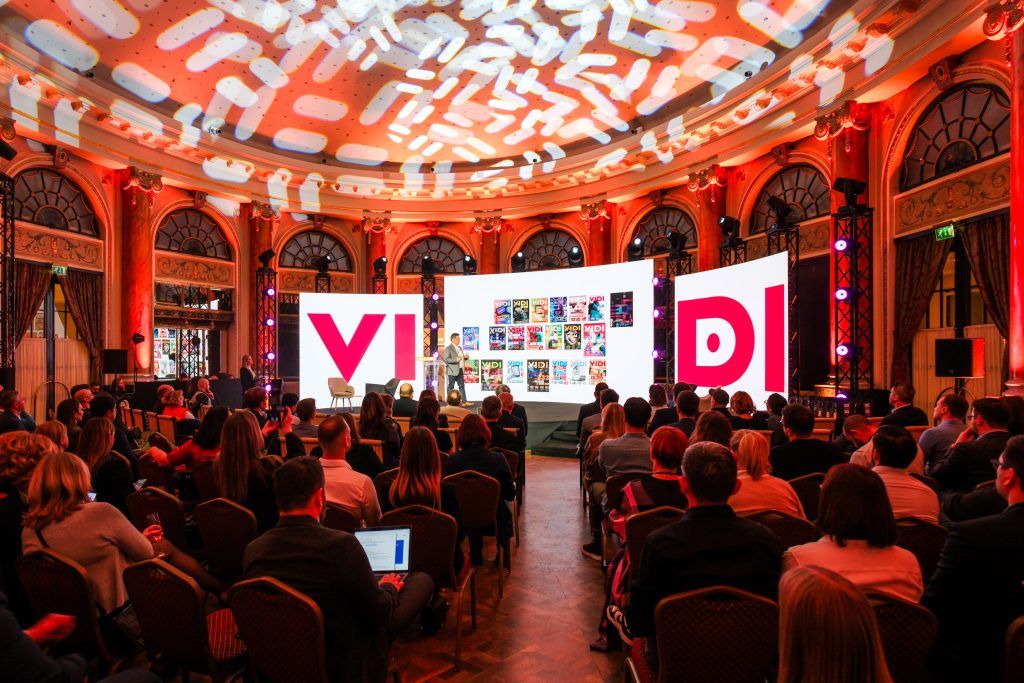
Winning the Silver Teslino Jaje motivates us even more to keep improving, expanding, and scaling.
Here’s what we're focused on next:
✨ This award is both an honor and a challenge — a challenge to keep innovating, a commitment to our vision, and proof that the tech and real estate sectors are changing for the better.
Thank you to everyone who believed in Bidsale. The best is yet to come.